 Speciality chemicals. Customised.
Craters and pinholes are common coating surface defects that can affect appearance, protection, adhesion and film quality. These defects are often linked to foam, air entrapment, poor wetting, contamination, incorrect additive selection or poor surface flow.
Explore Antifoam Additives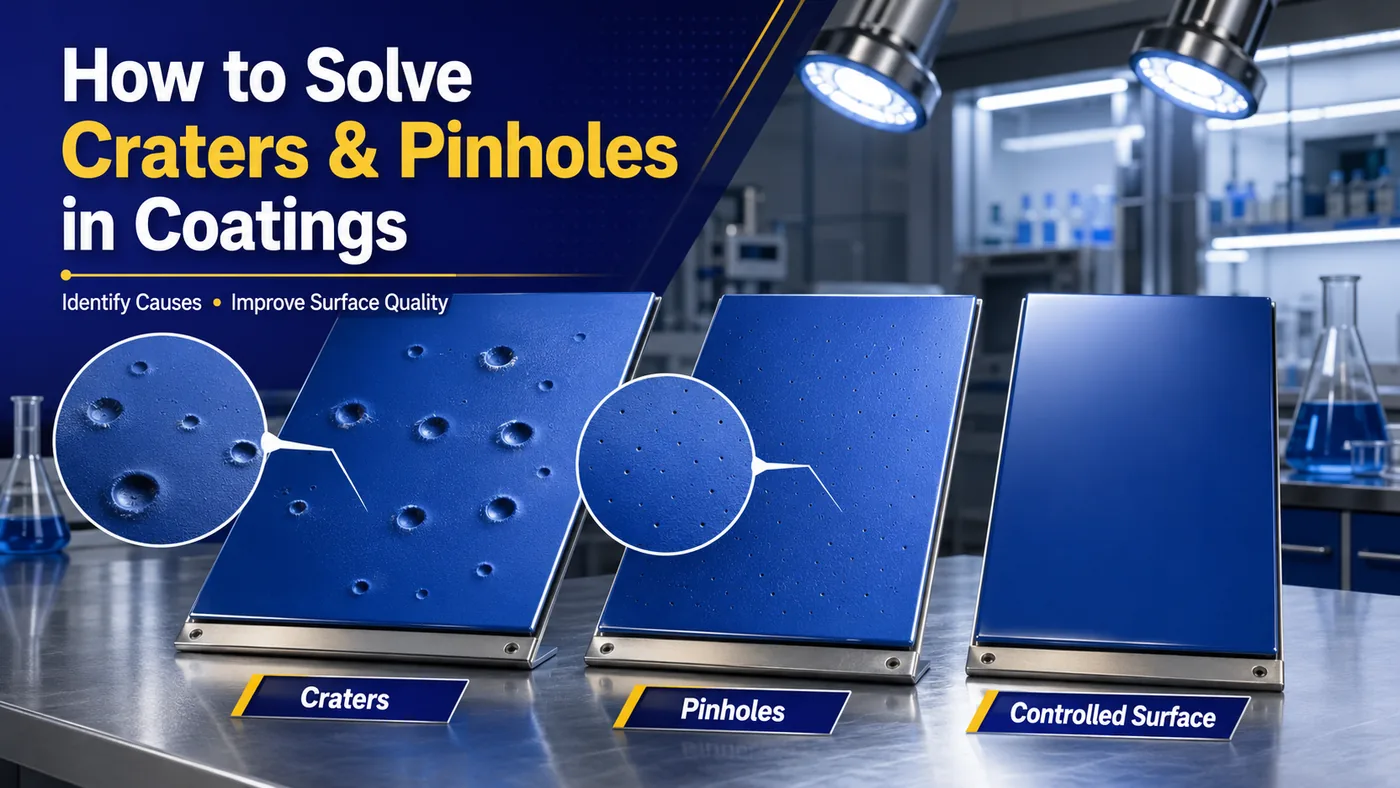 Overview
Why craters and pinholes happen in coatings
Coating defects are rarely caused by one factor alone. Craters and pinholes can appear because of trapped air, foam, incompatible additives, poor substrate wetting, contamination, solvent release issues, excessive viscosity or poor surface leveling.
Quick Answer: Craters and pinholes in coatings can be solved by controlling foam and air entrapment, selecting a compatible antifoam or defoamer, improving substrate wetting, optimizing flow and leveling, checking contamination, controlling viscosity and testing the coating under real application conditions.The right additive package is important because a strong antifoam may reduce foam but create craters if it is not compatible. Similarly, poor wetting or flow can make a coating look defective even when foam is controlled.
Craters and pinholes may indicate:
- Foam or microfoam inside the coating
- Air entrapment during mixing or application
- Poor antifoam compatibility
- Surface contamination or poor wetting
- Incorrect viscosity or rheology balance
- Poor flow and leveling after application
Craters vs pinholes: what is the difference?
Craters and pinholes can look similar, but the root cause and additive approach may be different.
| Defect | What It Looks Like | Common Cause | Additive Focus |
|---|---|---|---|
| Craters | Round depressions or small circular holes in the coating film. | Surface tension difference, contamination, poor wetting or incompatible additives. | Wetting additives, flow and leveling additives, compatible antifoam selection. |
| Pinholes | Very small holes caused by trapped air or escaping bubbles. | Foam, microfoam, air entrapment, solvent release or high viscosity. | Antifoam/defoamer additives, rheology control and process optimization. |
Common causes of craters and pinholes in coatings
Before adding more additive, first identify whether the issue is foam, wetting, contamination, viscosity or flow-related.
🫧Foam & Microfoam
Foam trapped inside the coating can burst during film formation and leave pinholes or small surface defects.
⚙️Air Entrapment
High-speed mixing, pumping, filling or spray application can introduce air into the coating system.
🧪Additive Incompatibility
Incorrect antifoam, defoamer or flow additive selection can create surface tension differences and craters.
🧼Surface Contamination
Oil, dust, silicone residue or substrate contamination can prevent uniform coating wetting.
📈High Viscosity
High viscosity can trap bubbles and slow air release, increasing the risk of pinholes.
〰️Poor Flow & Leveling
Poor surface flow can prevent the film from closing defects before drying or curing.
Solution GuideHow additives help solve craters and pinholes
Different additives address different causes. The correct solution depends on diagnosing the root problem.
| Problem | Recommended Additive Focus | How It Helps |
|---|---|---|
| Foam during manufacturing | Antifoam / Defoamer Additives | Reduces foam generation and helps break foam during mixing, grinding or let-down. |
| Microfoam and trapped air | Antifoam for Industrial Coatings | Improves air release and reduces pinholes caused by trapped bubbles. |
| Poor substrate wetting | Wetting Additives | Improves surface wetting and reduces crater formation caused by poor spread. |
| Poor film flow | Flow & Leveling Additives | Improves film smoothness and helps the coating level before drying or curing. |
| High viscosity trapping air | Rheology Additives | Supports viscosity balance, sag resistance and air release behaviour. |
| Pigment dispersion foam | Wetting & Dispersing Additives + Antifoam | Balances pigment wetting, dispersion stability and foam control. |
Step-by-step approach to solve craters and pinholes
Do not start by increasing additive dosage blindly. Use a structured diagnosis approach.
1Identify the Defect
Confirm whether the issue is crater, pinhole, fisheye, bubble, poor leveling or contamination mark.
2Check Foam Source
Observe foam during grinding, let-down, transfer, filling and final application.
3Review Antifoam Compatibility
Test whether the antifoam reduces foam without creating craters, fisheyes or poor leveling.
4Check Substrate Wetting
Ensure the coating wets the substrate properly and is not being rejected by contamination.
5Optimize Viscosity
Adjust rheology and process conditions so trapped air can release before film formation.
6Test Real Application
Check brush, roller, spray, dip or production application conditions instead of only lab mixing.
System GuideDifferent coating systems need different defect-control strategies
Craters and pinholes can occur in water-based coatings, solvent-based coatings, industrial paints, decorative paints, inks and pigment concentrates. The solution must match the system.
- Water-based coatings often need careful antifoam and surfactant balance.
- Solvent-based coatings need strong compatibility checks to avoid surface defects.
- Industrial paints need foam control across production and application stages.
- Decorative paints need smooth application, good leveling and low surface defects.
- Pigment concentrates need balance between dispersing additives and antifoam additives.
Practical formulation note
If craters appear only after adding antifoam, the issue may be antifoam incompatibility or overdose. If pinholes appear after drying, the problem may be trapped air, microfoam, viscosity or solvent release.
Read Foam Prevention Guide Common MistakesMistakes that make craters and pinholes worse
Incorrect additive selection or poor process control can turn a small surface issue into a repeated production problem.
⚠️Adding More Antifoam Blindly
Overdosing antifoam can reduce foam but increase craters, fisheyes and surface defects.
🧼Ignoring Surface Contamination
No additive can fully fix coating rejection if the substrate is contaminated with oil, dust or residue.
🧪Skipping Compatibility Testing
Additives should be checked with the resin, pigment package, rheology system and application method.
Related RSA Additive SolutionsExplore related coating defect and additive pages
Explore RSA pages and technical resources related to antifoams, defoamers, flow additives, rheology and surface defect control.
Antifoam for Coatings Antifoam for Industrial Coatings Prevent Foam in Industrial Coatings Antifoam vs Defoamer Silicone vs Non-Silicone Antifoam Flow & Leveling Additives Rheology Additives Wetting & Dispersing Agents Additives for Industrial Paints Additives for Water-Based Coatings Additives for Solvent-Based Coatings Coating Additives Manufacturer FAQsFAQs on craters and pinholes in coatings
Common questions from paint, coating and industrial formulation manufacturers.
What causes craters in coatings?
Craters in coatings can be caused by surface contamination, poor substrate wetting, incompatible additives, surface tension differences, poor flow or overdosing of antifoam or defoamer additives.
What causes pinholes in coatings?
Pinholes are commonly caused by foam, microfoam, trapped air, poor air release, high viscosity, fast drying, solvent release or application-related air entrapment.
Which additive helps prevent pinholes?
Antifoam and defoamer additives help reduce foam and trapped air that can lead to pinholes. Rheology and flow additives may also help depending on the system.
Can antifoam cause craters?
Yes. If antifoam is incompatible or overdosed, it can create surface tension differences and cause craters, fisheyes or poor leveling. Compatibility testing is important.
How do flow and leveling additives help coating defects?
Flow and leveling additives help the coating spread more evenly, reduce surface irregularities and improve film smoothness before drying or curing.
Are craters and fisheyes the same?
They are related surface defects but may differ in appearance and cause. Both can be linked to contamination, surface tension differences, poor wetting or additive incompatibility.
Can RSA help solve craters and pinholes?
Yes. Raj Speciality Additives can help coating and paint manufacturers evaluate suitable antifoam, defoamer, wetting, flow, leveling and rheology additive categories based on the coating system and defect type.
Need help solving craters or pinholes in coatings?
Share your coating system, defect image, resin type, application method, antifoam usage or process condition with Raj Speciality Additives. Our team can help identify the right additive direction.
Contact RSASend Your Enquiry
Please fill out the form and our team will get back to you.