 Speciality chemicals. Customised.
Orange peel is a common coating surface defect where the dried film looks uneven, textured or similar to the surface of an orange. It can affect gloss, smoothness, appearance and perceived coating quality. The right flow and leveling additive, rheology balance and application control can help reduce this defect.
Explore Flow & Leveling Additives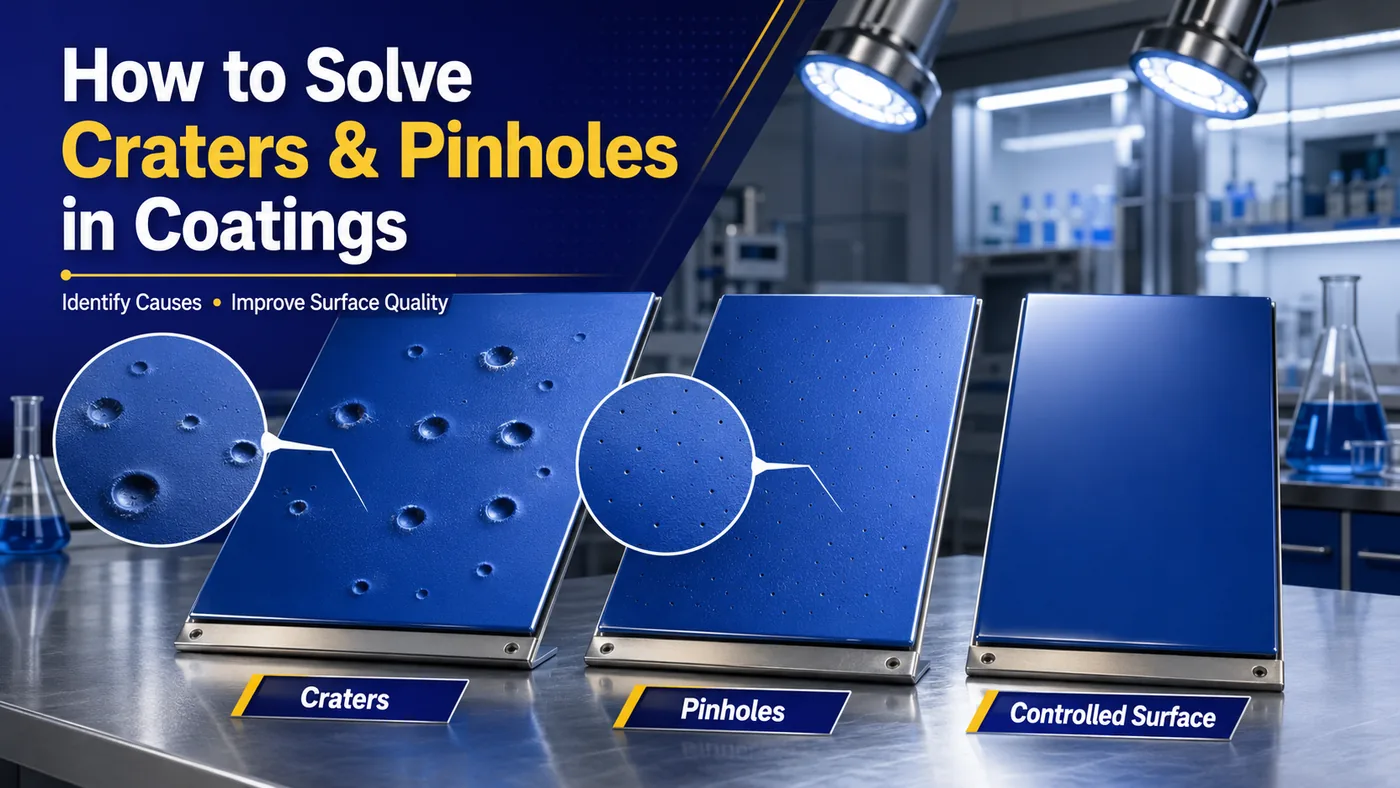 Overview
Why orange peel happens in coatings
Orange peel usually appears when the coating does not flow and level properly before drying or curing. It can be caused by viscosity imbalance, poor leveling, fast solvent or water evaporation, incorrect application settings, poor surface wetting or incompatible additive selection.
Quick Answer: Orange peel in coatings can be prevented by improving flow and leveling, optimizing viscosity and rheology, selecting compatible leveling additives, controlling application thickness, adjusting spray or roller conditions, and ensuring the coating has enough time to level before drying or curing.Additives can help, but orange peel is not solved by additive selection alone. The final result also depends on coating viscosity, application method, film thickness, substrate condition, drying speed and formulation compatibility.
Orange peel may indicate:
- Poor flow and leveling
- Incorrect viscosity or rheology balance
- Fast drying before the film can level
- Poor spray atomization or application settings
- Surface wetting or substrate issues
- Incompatible additive package
Common causes of orange peel in coatings
Identifying the root cause helps formulators choose whether the solution is additive selection, process control, viscosity adjustment or application correction.
〰️Poor Leveling
The coating film does not smooth out before drying, leaving an uneven or textured finish.
📈High Viscosity
If viscosity is too high, the coating may not flow properly after application.
🌬️Fast Drying
Fast evaporation or curing can lock the film before it has enough time to level.
🎯Poor Spray Atomization
Incorrect spray pressure, distance, nozzle size or film thickness can create uneven coating texture.
🧼Surface Wetting Issues
Poor wetting of the substrate can prevent uniform spreading and smooth film formation.
⚗️Additive Incompatibility
Incorrect flow, leveling, antifoam or rheology additive balance can worsen surface defects.
Solution GuideHow additives help prevent orange peel
The right additive package improves film flow, surface uniformity and application consistency.
| Problem Area | Recommended Additive Focus | How It Helps |
|---|---|---|
| Poor surface leveling | Flow & Leveling Additives | Improves film flow, surface smoothness and leveling before drying. |
| High viscosity | Rheology Additives | Helps control flow, sag resistance, application feel and leveling balance. |
| Substrate wetting issue | Wetting Additives | Improves coating spread and uniform contact with the substrate. |
| Foam-related surface defects | Antifoam / Defoamer Additives | Helps reduce bubbles, microfoam, craters and pinholes that can affect surface appearance. |
| Pigment instability | Wetting & Dispersing Additives | Improves pigment distribution, shade consistency and film uniformity. |
Step-by-step approach to reduce orange peel
Use this checklist before changing additives or increasing dosage.
1Check Viscosity
Confirm whether the coating viscosity is suitable for the selected application method.
2Review Drying Speed
Ensure the film has enough open time to flow and level before drying or curing.
3Evaluate Leveling Additive
Test a compatible flow and leveling additive to improve surface smoothness.
4Check Application Method
Review spray pressure, nozzle size, spray distance, roller type, brush quality and film thickness.
5Inspect Substrate
Check surface cleanliness, wetting, roughness, primer compatibility and contamination.
6Test Full System
Test additives with pigments, resins, rheology modifiers, antifoams and final application conditions.
System GuideOrange peel prevention depends on coating type
Different coating systems need different flow, leveling, viscosity and application strategies.
- Industrial paints need strong application consistency and surface defect control.
- Decorative paints need smooth finish, roller mark control and good leveling.
- Water-based coatings need balance between wetting, defoaming, rheology and leveling.
- Solvent-based coatings need compatibility between resin, solvent balance and surface additives.
- Printing inks need flow, wetting and surface uniformity for print quality.
Practical formulation note
If orange peel improves when viscosity is reduced, the main issue may be flow and rheology. If it remains even after viscosity adjustment, check leveling additive compatibility, substrate wetting and drying speed.
Flow vs Leveling Additive Common MistakesMistakes that make orange peel worse
Orange peel often becomes worse when the formulation or application issue is misdiagnosed.
⚠️Only Adding More Leveling Additive
If viscosity, drying speed or application settings are wrong, extra additive may not solve the defect.
📈Ignoring Rheology
Too much structure can reduce leveling, while too little structure can cause sagging or poor film build.
🎯Skipping Application Trials
Lab drawdowns may look fine, but spray, roller or production application can reveal orange peel issues.
Related RSA Additive SolutionsExplore related surface defect and additive pages
Explore RSA resources related to flow, leveling, rheology, antifoam and coating surface defect control.
Flow & Leveling Additives Flow Additive vs Leveling Additive Rheology Additives Antifoam for Coatings Solve Craters & Pinholes Prevent Foam in Coatings Additives for Industrial Paints Additives for Decorative Paints Additives for Water-Based Coatings Additives for Solvent-Based Coatings Coating Additives Manufacturer Paint Additives Supplier FAQsFAQs on orange peel in coatings
Common questions from coating, paint and industrial formulation manufacturers.
What causes orange peel in coatings?
Orange peel is commonly caused by poor flow and leveling, high viscosity, fast drying, poor spray atomization, poor surface wetting, incorrect film thickness or incompatible additives.
How can orange peel be prevented in coatings?
Orange peel can be prevented by optimizing coating viscosity, improving flow and leveling, adjusting application settings, controlling drying speed, improving substrate wetting and selecting compatible additives.
Which additive helps reduce orange peel?
Flow and leveling additives are commonly used to improve film smoothness and reduce orange peel. Rheology additives, wetting additives and antifoams may also be needed depending on the root cause.
Can high viscosity cause orange peel?
Yes. High viscosity can reduce flow and leveling, preventing the coating film from smoothing out before drying or curing.
Can orange peel happen in water-based coatings?
Yes. Orange peel can occur in water-based coatings if viscosity, wetting, defoaming, rheology or drying speed is not properly balanced.
Is orange peel the same as poor leveling?
Orange peel is often a visible result of poor leveling, but it can also be influenced by application method, drying speed, film thickness and substrate condition.
Can RSA help reduce orange peel in coatings?
Yes. Raj Speciality Additives can help coating and paint manufacturers evaluate suitable flow, leveling, rheology, wetting and antifoam additive categories based on the coating system and defect type.
Need help reducing orange peel in coatings?
Share your coating system, application method, viscosity issue, surface defect image or formulation challenge with Raj Speciality Additives. Our team can help identify suitable additive directions.
Contact RSASend Your Enquiry
Please fill out the form and our team will get back to you.